- Bite-Sized Nostalgia
- Posts
- Bite-Sized Nostalgia


Remember when the best part of Saturday morning was pouring a giant bowl of cereal and catching your favorite cartoons? We’re trying to recreate that magic right here in your inbox.
If our weekly trips down memory lane bring a smile to your face or a "hey, I remember that!" to your lips, we’d be honored if you’d spread the word. Forward this email to your best friend from high school, your favorite cousin, or anyone who still misses the smell of a freshly opened pack of baseball cards.
This newsletter is a labor of love, and we want it to feel like yours. Whether you’re craving more stories about 8-bit gaming, the neon fashion of the mall, or the mixtapes that defined your summer of '88, drop us a line and let us know. Your memories are the fuel for this time machine.
Thank you for being part of our community and for keeping the spirit of the '80s alive. Now, grab a Tab or a Capri Sun, kick back, and enjoy this week's ride.

After Christmas, we had Easter specials to look forward to
The glow of a heavy CRT television was the true herald of spring in the 1980s. Before streaming allowed for year-round binges, Easter was a high-stakes event. You had one shot to catch the seasonal specials, or you’d be left out of the Monday morning playground post-game.
The lineup was iconic. We’d sit cross-legged on shag carpeting, waiting for the Rankin/Bass animatronics of The Easter Bunny Is Comin' to Town or the whimsical, hand-drawn charm of It’s the Easter Beagle, Charlie Brown. These specials weren't just cartoons; they were cultural milestones. There was a specific, grainy warmth to the animation—a mix of pastel watercolors and synthesized soundtracks that felt like a hug from a decade obsessed with neon and optimism.
Whether it was Peter Cottontail saving Easter from an icy villain or the Berenstain Bears learning a moral lesson about candy over-consumption, these broadcasts turned the living room into a sanctuary. We’d watch through the sugar-high of hollow chocolate ears and jellybeans, captivated by stories of renewal and friendship. Decades later, the static of a VHS recording still evokes that specific brand of 80s magic: a time when the world paused for thirty minutes just to watch a bunny deliver some hope.

From the concert stage to the big screen
In the mid-1980s, Madonna didn’t just want to be a pop star; she wanted to be a movie star. Her transition from MTV icon to the silver screen was a masterclass in myth-making, starting with a brief but electric cameo in Vision Quest (1985), where she sang "Crazy for You" in a smoky bar.
However, it was Susan Seidelman’s Desperately Seeking Susan that truly captured the zeitgeist. Madonna played the title character—a bohemian, street-smart drifter—with such effortless cool that she essentially played a heightened version of her own public persona. The film became a cult classic, turning her "wannabe" fashion of lace gloves and crucifixes into a global phenomenon.
But the Hollywood dream hit a snag in 1986 with Shanghai Surprise. Starring alongside her then-husband Sean Penn, the film was a critical and commercial disaster, earning her a Golden Raspberry Award. Undeterred, she pivoted to the screwball comedy Who’s That Girl (1987). While the film flopped, the soundtrack—led by the title track and "Causing a Commotion"—was a massive success.
Madonna’s 1980s film journey proved that while critics were hard to win over, her ability to sell a cinematic image was undeniable. She wasn’t just acting; she was building an empire.
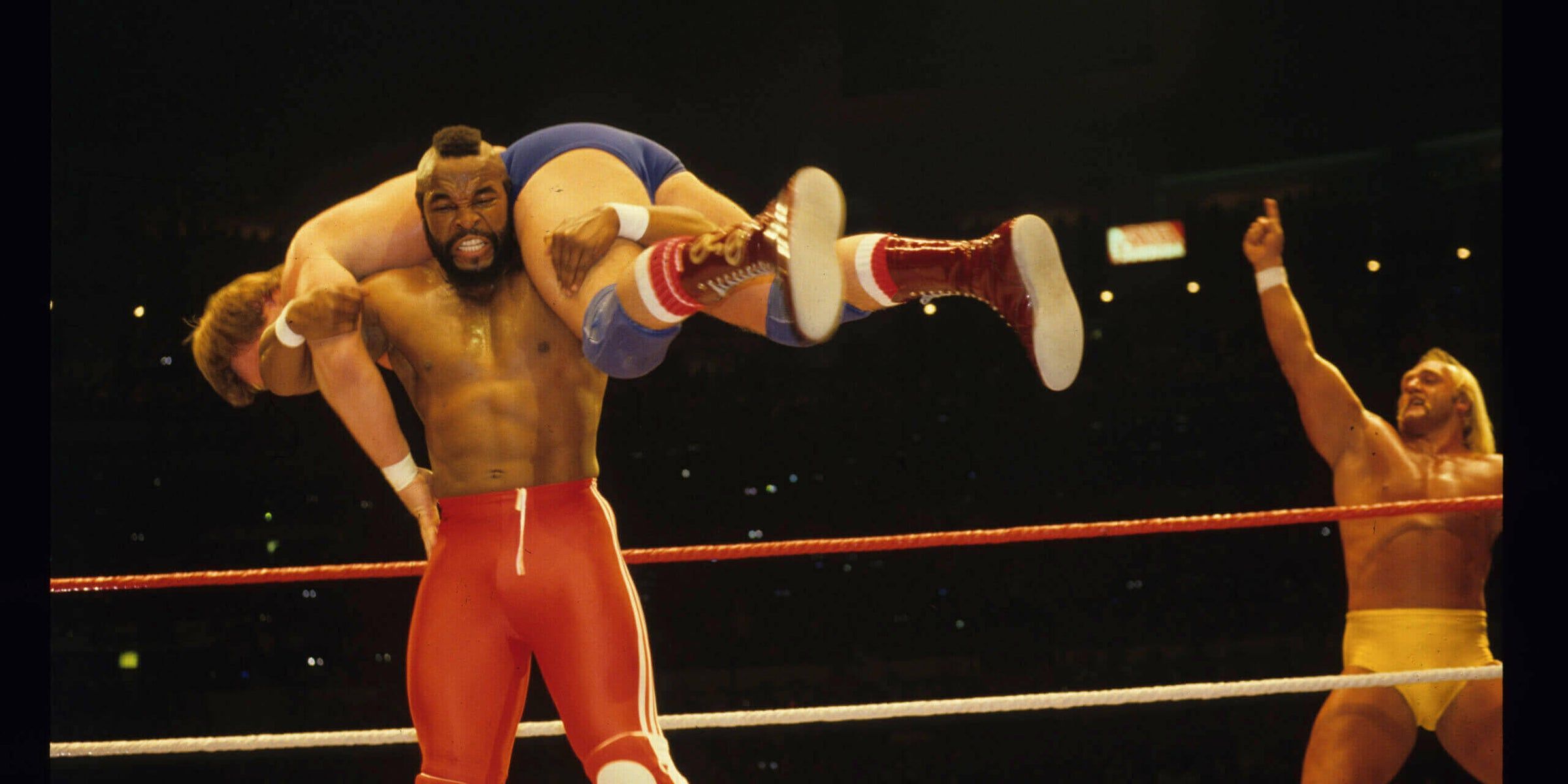
Wrestlemania changed wrestling forever
On March 31, 1985, the air inside Madison Square Garden was thick with more than just sweat—it was heavy with the scent of a revolution. Vince McMahon had bet the farm on a singular vision: WrestleMania. This wasn't just a wrestling card; it was the birth of "Sports Entertainment."
The event bridged the gap between the gritty squared circle and the glitz of Hollywood. With Mr. T tagging with Hulk Hogan and Cyndi Lauper at ringside, the "Rock 'n' Wrestling Connection" was solidified. The spectacle transformed wrestlers from regional tough guys into global superheroes. When the main event saw Hogan and Mr. T defeat "Rowdy" Roddy Piper and Paul Orndorff, the roar of the crowd echoed far beyond the arena walls.
WrestleMania changed the industry’s DNA forever. It proved that wrestling could be a mainstream commercial juggernaut, paving the way for the Pay-Per-View model that would dominate the next four decades. By inviting MTV and mainstream celebrities into the ring, McMahon didn't just sell out a venue; he moved wrestling from smoke-filled backrooms to the center of the cultural map. It was the moment the "Golden Age" officially began, turning a niche sport into an undying American epic.

Just don’t say his name 3 times!
In 1988, Tim Burton didn’t just release a movie; he unleashed a neon-soaked, macabre fever dream that redefined the supernatural. Beetlejuice arrived as a jagged contrast to the era’s polished blockbusters, trading high-tech CGI for hand-crafted puppets, stop-motion sandworms, and a sense of humor that felt delightfully "off."
The story of the Maitlands—a polite couple who die and find themselves trapped in their own home—turned the traditional ghost story on its head. Instead of the living fearing the dead, the dead were terrified of the "living" (specifically, the insufferable Deetz family). Enter Betelgeuse, played by Michael Keaton with a manic, moldy energy that remains one of cinema’s most chaotic performances. With his striped suit and graveyard breath, he was the "bio-exorcist" we didn’t know we needed.
From the iconic "Day-O" dinner party possession to the gothic elegance of Winona Ryder’s Lydia Deetz, the film became an anthem for the strange and unusual. It blended 1950s kitsch with German Expressionism, proving that horror could be hilarious and that the afterlife was probably just a giant, bureaucratic waiting room. Beetlejuice didn’t just haunt the box office; it gave every misfit a reason to celebrate the weird.
🎧 Retro Picks of the Week
💎Long Lost Musical Gem: With Black Velvet, Alannah Myles delivered a sultry, blues-rock powerhouse that served as a haunting tribute to the legacy of Elvis Presley. Its signature heavy bassline and Myles’s smoky vocals helped the track define the transition from 80s rock into the grittier sounds of the early 90s.
📺 T.V. Show: Jim Henson’s imaginative series Fraggle Rock followed a community of colorful, subterranean creatures who navigated complex themes of interconnectedness and conflict resolution. By blending puppetry with catchy music, the show became a beloved lesson in sociology for children across the globe.
📼 Movie: Romancing the Stone, the high-stakes adventure followed a timid romance novelist who found herself thrust into a real-life jungle quest alongside a rugged fortune hunter. The film successfully blended screwball comedy with "Indy-style" action, cementing Michael Douglas and Kathleen Turner as a premier cinematic duo.
🎵 Song: Crazy For You, originally recorded for the Vision Quest soundtrack, this power ballad showcased Madonna’s versatility as a soulful vocalist beyond the dance floor. The song became an instant prom-night classic, marking her first significant pivot into the realm of mainstream romantic pop.
🕹️ Video Game: Teenage Mutant Ninja Turtles, released for the NES, this notoriously difficult side-scroller tasked players with navigating the sewers and streets of NYC to thwart the Shredder. While the underwater "dam level" remains a source of collective frustration for gamers, its success helped solidify the TMNT media empire.
👾 Cartoon: Strawberry Shortcake, what began as a greeting card character blossomed into a vibrant animated world centered on the sweet-smelling residents of Strawberryland. The series—and its scented toy line—became a quintessential 1980s staple by emphasizing friendship, kindness, and the power of a positive attitude.
