- Bite-Sized Nostalgia
- Posts
- Bite-Sized Nostalgia


Remember when the best part of Saturday morning was pouring a giant bowl of cereal and catching your favorite cartoons? We’re trying to recreate that magic right here in your inbox.
If our weekly trips down memory lane bring a smile to your face or a "hey, I remember that!" to your lips, we’d be honored if you’d spread the word. Forward this email to your best friend from high school, your favorite cousin, or anyone who still misses the smell of a freshly opened pack of baseball cards.
This newsletter is a labor of love, and we want it to feel like yours. Whether you’re craving more stories about 8-bit gaming, the neon fashion of the mall, or the mixtapes that defined your summer of '88, drop us a line and let us know. Your memories are the fuel for this time machine.
Thank you for being part of our community and for keeping the spirit of the '80s alive. Now, grab a Tab or a Capri Sun, kick back, and enjoy this week's ride.
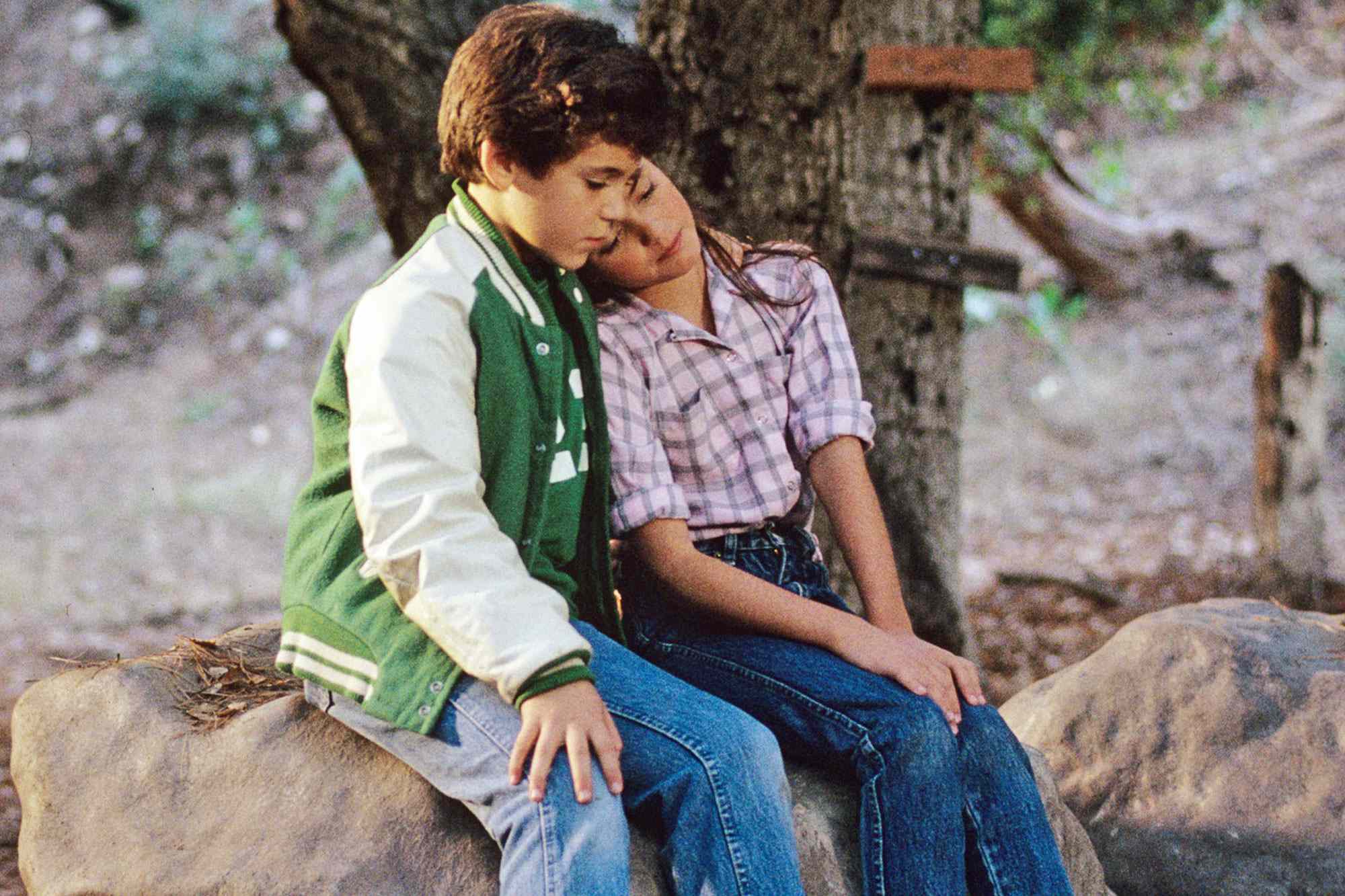
The Wonder Years took us on a weekly roller coaster of emotions
In 1988, while we were busy dodging neon-colored fashion trends, The Wonder Years arrived to remind us that being a kid was actually kind of a beautiful, messy, and heartbreaking business. Watching Kevin Arnold navigate the suburban hallways of the late '60s felt strangely familiar, even if our own "wonder years" were happening in a totally different decade. It was the first time a sitcom felt less like a series of punchlines and more like a collective memory, narrated by the older, wiser voice of an adult Kevin who finally understood the gravity of his own childhood.
For those of us growing up in the late '80s and early '90s, the show was an emotional anchor. Whether it was the agonizing tension of Kevin and Winnie Cooper’s first kiss or the relatable friction between Kevin and his gruff-but-loving dad, Jack, the show captured the "universal" experience of growing up. It didn’t shy away from the awkwardness of puberty or the bittersweet reality that friends—and even favorite teachers—eventually move on.
Set against the soulful backdrop of Joe Cocker’s "With a Little Help from My Friends," The Wonder Years gave us permission to feel nostalgic for our own lives while we were still living them. It taught us that the "small" moments—a game of catch, a walk to the bus stop, or a quiet night at the kitchen table—were actually the biggest moments of all.
«« This Week’s Mini-Rewind ««
🦇 1968: The Bat-Signal fades as the series finale of Batman airs on ABC.
🕺 1983: David Bowie invites us to "Let’s Dance" with the release of his iconic title track.
🐾 1969: One small step for a dog—Snoopy officially becomes the first beagle on the Moon!
🏠 1977: Come and knock on our door! Three’s Company debuts on ABC, kicking off an 8-season run.
🤵 1985: The sophisticated Mr. Belvedere makes his television debut on ABC.
🕹️ 1982: Atari brings the arcade home, releasing Pac-Man for the Atari 2600.
🚙 1990: Ford changes the suburban landscape by introducing the Explorer to its lineup.
🎸 1987: U2 releases the hauntingly beautiful "With or Without You" from The Joshua Tree.
🎤 1992: Mariah Carey delivers a legendary vocal performance for MTV Unplugged.
🏀 1981: The final whistle blows for The White Shadow as the series finale airs on CBS.
🍀 1970: McDonald’s turns the world green with the introduction of the Shamrock Shake.
📺 1990: The Simpsons take over the checkout aisle with their first-ever TV Guide cover.
🥣 1964: General Mills makes breakfast "magically delicious" with the launch of Lucky Charms.
🦸 1981: The Greatest American Hero flies onto ABC in a special 2-hour pilot movie.
🏙️ 1984: Susan Saint James and Jane Curtin debut in the NYC-based sitcom Kate & Allie.
🍎 1987: Modern-day fairy tales begin as The Charmings premieres on ABC.
🎬 1992: Sharon Stone and Michael Douglas heat up the box office in the premiere of Basic Instinct.
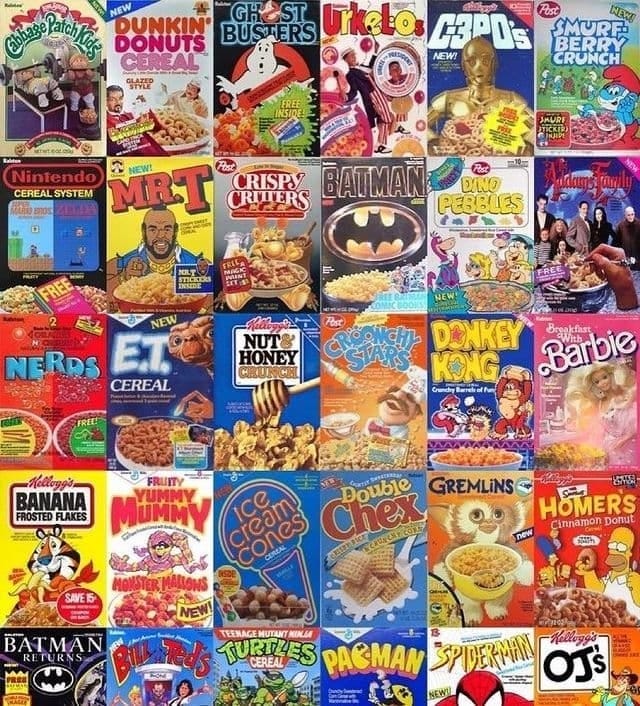
As a kid, we had it all with our cereal choices!
Walk down the cereal aisle in 2026 and it’s a sea of "organic" and "low-sugar" boxes, but if you grew up in the 1980s, that aisle was essentially a high-fructose movie theater lobby. The '80s were the golden age of the licensed tie-in, where a 30-minute toy commercial on Saturday morning was almost guaranteed to have a crunchy counterpart waiting for you at the grocery store.
Who could forget the thrill of pouring a bowl of Ghostbusters cereal, where the tiny "ghost" marshmallows looked more like blobs of pink sugar, or the strangely addictive E.T. cereal that combined peanut butter and chocolate flavors? It wasn't just about the taste; it was about the ritual. We’d sit there, milk-splashed and blurry-eyed, meticulously reading the back of a C-3POs box like it was a sacred text, hoping to find a secret code or a glow-in-the-dark sticker tucked inside.
From the Smurf-Berry Crunch that famously turned our milk (and tongues) bright blue to the short-lived but legendary Nintendo Cereal System, these boxes turned breakfast into an event. We weren’t just eating corn puffs; we were hanging out with our favorite characters before the bus arrived.
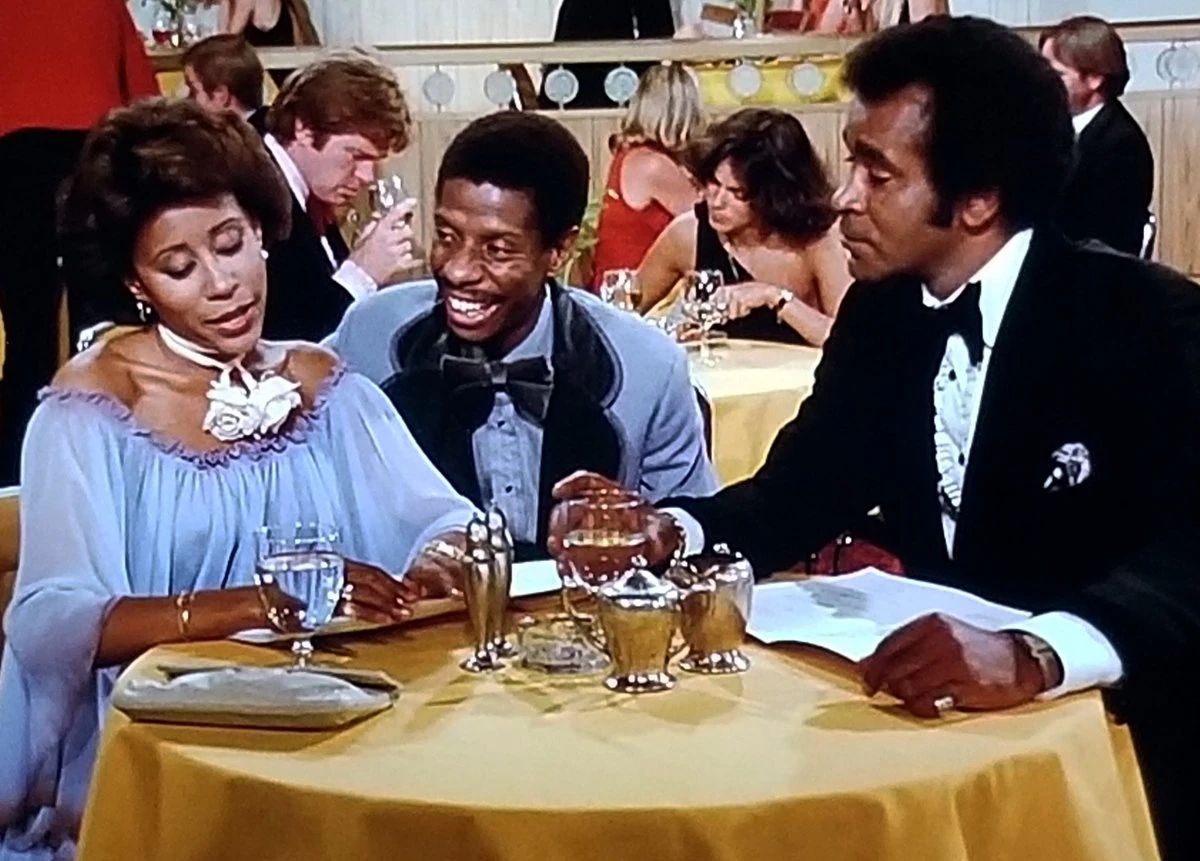
How could one show have so many celebrity cameos?
Long before we had massive crossover events or star-studded reality TV, we had a luxury liner called the Pacific Princess. For anyone growing up in the late '70s and '80s, Saturday night wasn’t complete without hearing those opening brass notes of Jack Jones singing about "love, exciting and new." But the real draw of The Love Boat wasn't just the tropical scenery or Captain Stubing’s pristine white shorts—it was the absolute parade of legendary guest stars.
Every week, the show felt like a televised Hollywood retirement home and a rising star showcase rolled into one. You’d tune in and see a surreal mix: icons like Gene Kelly, Lana Turner, or Ginger Rogers sharing screen time with younger faces like Tom Hanks, Janet Jackson, or even Billy Crystal. It was the only place on earth where a Golden Age starlet might find romance with a sitcom dad at the Lido Deck buffet.
The celebrity cameos were so frequent that part of the fun was the "Who's Who" game we played from our shag-carpeted living rooms. It turned the show into a cultural time capsule, capturing everyone from sports legends like Joe Namath to fashion icons like Halston. It was campy, it was breezy, and it reminded us that no matter who you were in Hollywood, everyone eventually needed a vacation—and a drink from Isaac at the bar.
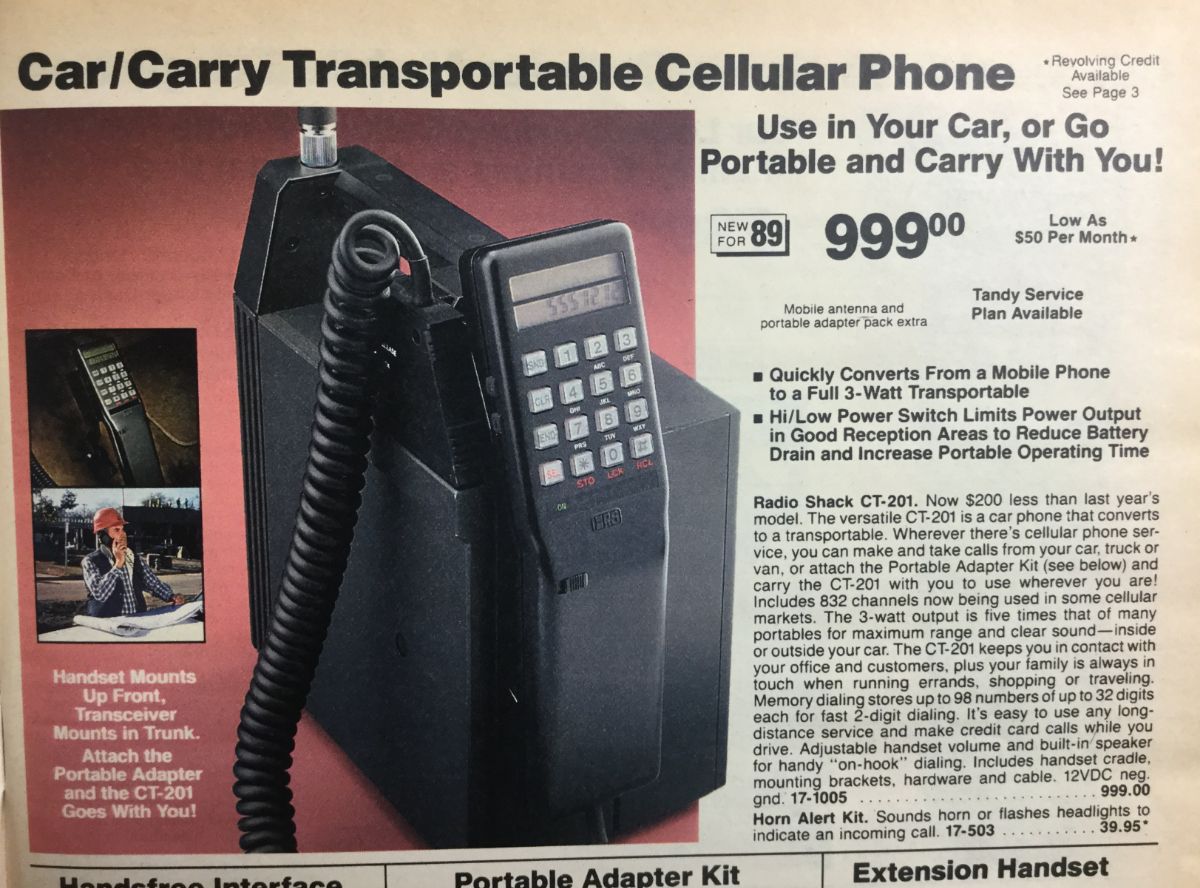
If you had a cell phone early on, you were a titan!
Long before we were scrolling through endless feeds on pocket-sized supercomputers, the "mobile phone" was less of a convenience and more of a literal workout. In the mid-1980s, if you saw someone chatting on a Motorola DynaTAC 8000X, you weren't looking at a tech geek—you were looking at a titan of industry (or at least someone who wanted to look like one). We affectionately called them "The Brick," and for good reason; they weighed nearly two pounds and cost about as much as a used sedan.
As we moved into the early '90s, the technology started to shrink, but the "cool factor" only grew. Who could forget the iconic bag phone? It was essentially a wired handset attached to a heavy battery pack inside a shoulder bag, usually living permanently in the passenger seat of a car. It felt like peak sophistication to make a call while sitting in traffic, even if the connection was fuzzier than a worn-out VHS tape.
By the time the sleek StarTAC arrived in 1996, the dream of being reachable anywhere had finally become a reality for the rest of us. We went from being tethered to a kitchen wall by a twenty-foot coiled cord to the freedom of the flip. It was the beginning of the end for the neighborhood payphone, and we didn't even realize yet that our lives were about to be changed forever—one "roaming" charge at a time.
🎧 Retro Picks of the Week
💎Long Lost Musical Gem: Released in 1985 as the follow-up to their global smash "Take On Me," a-ha's "The Sun Always Shines on T.V." is a moody, cinematic masterpiece that shifts from a haunting, melancholic intro into a powerful wall of synth-rock.
📺 T.V. Show: Premiering in 1986, ALF centered on the hilarious domestic chaos that ensued when a wisecracking, cat-craving alien from the planet Melmac crash-landed into the Tanner family's suburban garage. The show became a defining piece of 80s pop culture by blending traditional family sitcom tropes with the puppet-led anarchy of Gordon Shumway, whose signature laugh and sarcastic wit made him an instant icon of the decade.
📼 Movie: Released in 1986, Gung Ho stars Michael Keaton as a fast-talking foreman who convinces a Japanese auto giant to reopen a shuttered factory in his small Pennsylvania town. Directed by Ron Howard, the film served as a sharp, comedic time capsule of the 1980s "Japanophobia" era, finding humor and heart in the culture clash between American blue-collar grit and Japanese corporate discipline.
🎵 Song: Released in 1989 by Digital Underground, "The Humpty Dance" became an overnight hip-hop sensation driven by its relentless, heavy bassline and the unforgettable, nasal delivery of Shock G’s alter ego, Humpty Hump. The track’s success was cemented by its iconic music video featuring the Groucho Marx glasses and nose, turning a catchy club anthem into a permanent fixture of pop culture history.
🕹️ Video Game: Released in 1984 by Atari, Star Wars: The Last Starfighter (often simply referred to by fans of the film as Starfighter) was a groundbreaking arcade cabinet that used cutting-edge 3D polygon graphics to put players directly into the cockpit of a Gunstar. The game mirrored the movie's legendary plot where a high score on an arcade machine served as a recruitment tool for the Rylan Star League, making every kid in the local mall feel like they were just one quarter away from saving the frontier.
👾 Cartoon: Debuting as a television special in 1985 before launching into a full series in 1986, Pound Puppies followed a group of resourceful canines led by the brave Cooler who operated an underground railroad to find "the perfect person" for every homeless dog. Produced by Hanna-Barbera and inspired by the massive Tonka toy craze, the show balanced heartfelt adoption stories with the comedic antics of the villainous Katrina Stoneheart and her spoiled daughter, Brattina.
